The Mystery of the Two Medusa Heads
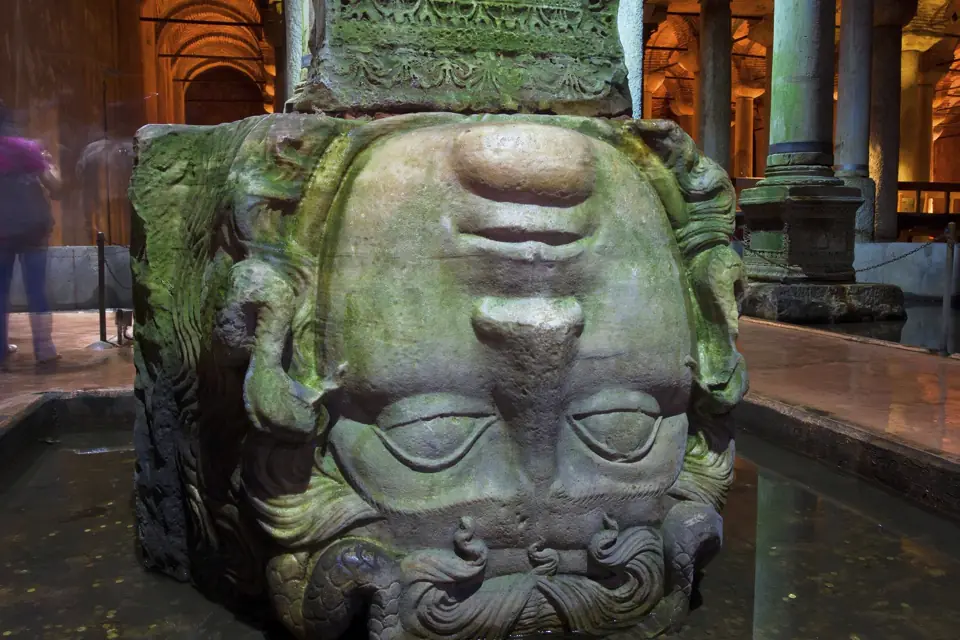
In the northwest corner of the Basilica Cistern, large Medusa heads sit beneath two columns. They are not displayed as freestanding sculptures. Instead, they serve as load-bearing bases beneath the columns. One Medusa head has been laid on its side. The other has been turned completely upside down. So why? First of all, we know that these stones were not made for the cistern. The reliefs are dated to around the fourth century, and it is generally accepted that they were brought here from an older Roman building and reused. Exactly which building they came from is not known for certain. It has been suggested that they may be connected with the area around Çemberlitaş, but this remains a scholarly hypothesis. There are also different explanations for the way the heads were positioned. The simplest explanation is that the builders used the available stone blocks in whatever way best suited them for supporting the columns. In that case, the direction the reliefs faced mattered less than the stones' load-bearing function. However, the legend of Medusa turning people to stone with her gaze has given rise to other interpretations. It is said that the heads were placed upside down to neutralize this power. Another idea that has been put forward is that, in the Christian Byzantine world, old pagan symbols were deliberately turned downward. There is no definitive historical document to support these theories. For this reason, we cannot say for certain why the heads are positioned this way. What is certain is that these two stones are important examples of Roman-era architectural fragments being reused centuries later. Today, they are among the cistern's best-known features. But for a long time they lay buried under sediment, so visitors were unable to see them. This brings us to the building's more recent history: the story of how the cistern was preserved and turned into a museum.
 NextRediscovery and the Present Daychevron_right