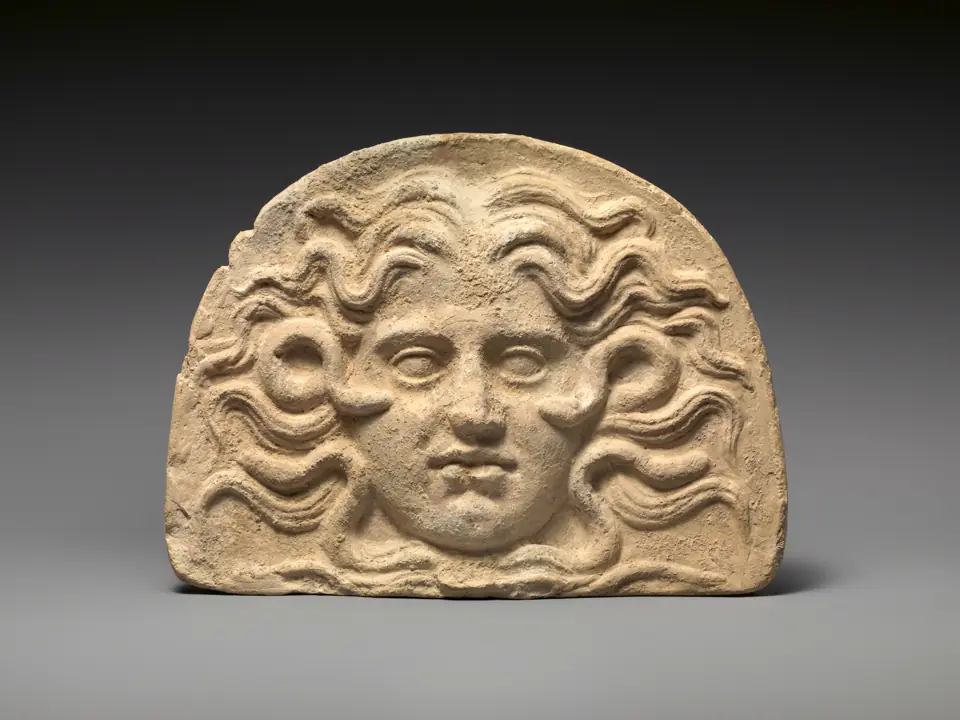
The Legend of Medusa
To understand the meaning of the Medusa heads in the Basilica Cistern, we need to turn to ancient Greek mythology. Medusa was one of three sisters known as the Gorgons. While Stheno and Euryale were considered immortal, Medusa was mortal. According to legend, anyone who looked directly at Medusa's face was turned to stone. For an ordinary person, therefore, encountering her meant mortal danger. But there is no single version of Medusa's story. In early Greek accounts, she generally appears as a terrifying creature. The Roman poet Ovid, however, tells a different story: Medusa is originally a beautiful woman. After the sea god Poseidon assaults her in Athena's temple, Athena turns Medusa's hair into snakes. This is a later interpretation of the myth; not all ancient accounts share the same story. Medusa's best-known tale, however, involves Perseus. The young hero is given the task of bringing back Medusa's head. But how will he accomplish this without looking into her eyes? According to the story, Perseus reaches Medusa with the help of the gods. Instead of looking directly at her face, he watches her reflection in his polished shield. While Medusa sleeps, he cuts off her head and completes his task. According to the myth, Medusa's head retains its power to turn people to stone even after her death. Perseus eventually gives the head to Athena. Over time, in the ancient world, Medusa's face came to represent not only fear but also protection against evil. This is why it was used on shields, temples and a variety of objects. The Medusa heads we see in the Basilica Cistern are Roman-era examples of this ancient symbol.
 NextThe Mystery of the Two Medusa Headschevron_right